Automate Your Accounting: Key for SMEs and Freelancers
Accounting: A Constant Challenge for SMEs and Freelancers
Accounting management is one of the most critical and often tedious tasks for any small and medium-sized enterprise or freelancer. From issuing invoices and tracking expenses to bank reconciliation and tax preparation, the workload can be overwhelming. Many entrepreneurs dedicate valuable hours to these administrative tasks, time they could invest in business development, customer service, or strategy.
Human errors are another constant concern. A mistake on an invoice, an incorrect expense classification, or an omission can lead to problems with the tax authorities, penalties, or, at best, an additional headache to correct them. This is where accounting process automation becomes an indispensable ally.
What Does Accounting Automation Involve?
Accounting automation refers to the use of software and technological tools to perform repetitive and rule-based tasks within the financial process. It is not about replacing the accountant or manager, but about enhancing their work, freeing them from mechanical tasks so they can focus on analysis, strategy, and decision-making.
Key Areas of Automation:
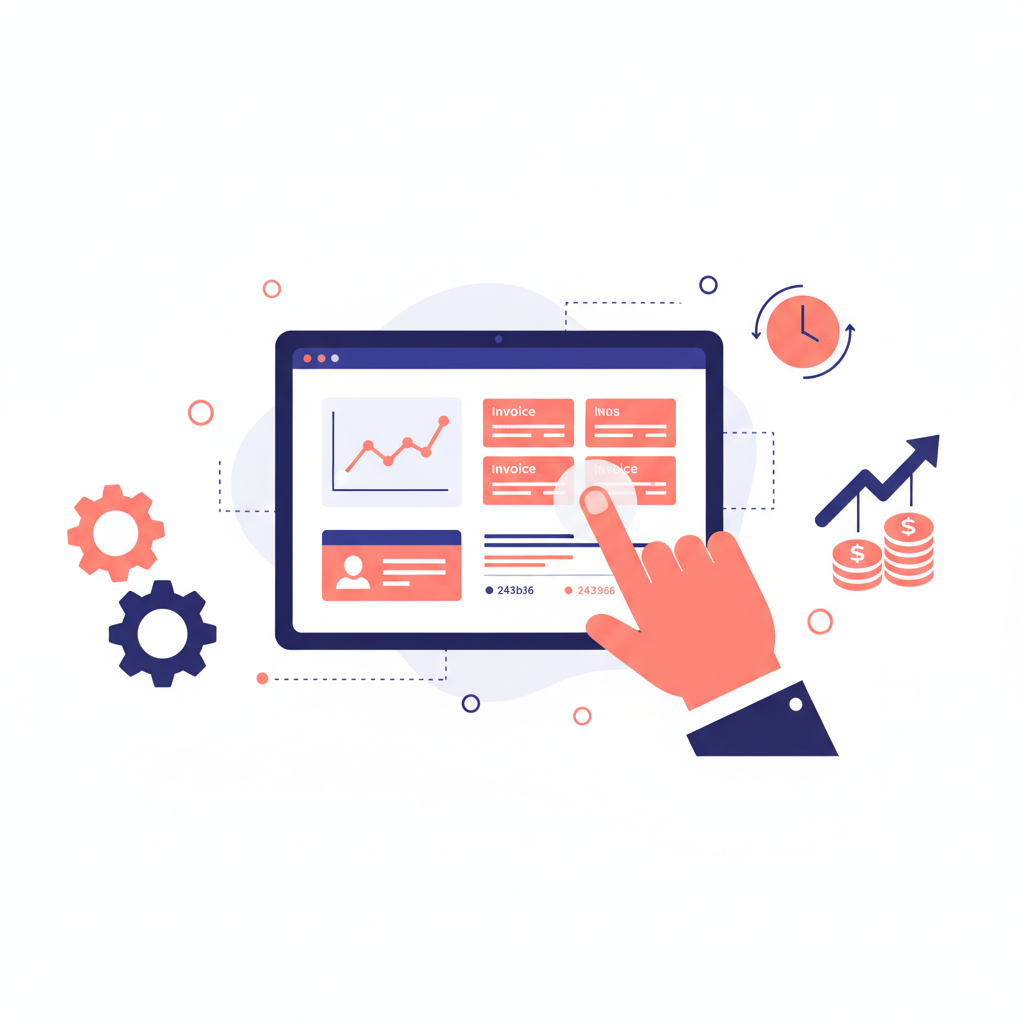
- Invoicing and Collections: Automatic generation of recurring invoices, scheduled sending to clients, tracking of pending payments, and automatic reminders.
- Expense Management: Digitization of receipts and invoices (OCR scanning), automatic expense categorization, and linking with bank accounts.
- Bank Reconciliation: Direct connection to your bank to automatically compare transactions and balances, quickly identifying discrepancies.
- Financial Reports: Instant generation of balance sheets, profit and loss statements, and other key reports with updated data.
- Tax Preparation: Automatic collection and organization of necessary information for filing tax forms, facilitating the work of the tax advisor.
Tangible Benefits for Your Business
1. Time Savings and Cost Reduction
By automating manual tasks, you and your team will free up hours that can be dedicated to higher-value activities. This directly translates into greater efficiency and, in the long term, a reduction in operational costs.
2. Minimization of Human Errors
Automated systems follow predefined rules and perform calculations with much greater accuracy than human intervention, drastically reducing the probability of accounting errors.
3. Greater Data Accuracy and Reliability
With updated and accurate data, you will have a clear and real-time view of your company's financial health, which is essential for informed decision-making.
4. Simplified Regulatory Compliance
Automation tools help maintain comprehensive and organized records of all transactions, facilitating auditing and compliance with tax and legal obligations.
5. Improved Cash Flow
Automating collection reminders and tracking pending invoices can accelerate the revenue cycle, significantly improving your business's cash flow.
How to Start Automating Your Accounting?
The first step is to evaluate your current accounting processes and identify the most repetitive and error-prone tasks. Then, research cloud-based accounting software solutions (SaaS) that suit the needs and size of your SME or business. Many offer free trial periods and are scalable.
Consider integration with other tools you already use, such as your CRM or project management system. A good starting point is to automate invoicing and expense management, as these are areas with an immediate impact.
At Factoría de Apps, we can advise you on the best solutions and how to implement them so that your business in Lleida and beyond can benefit from the efficiency of accounting automation. It's time to put aside manual spreadsheets and embrace the future of financial management.